

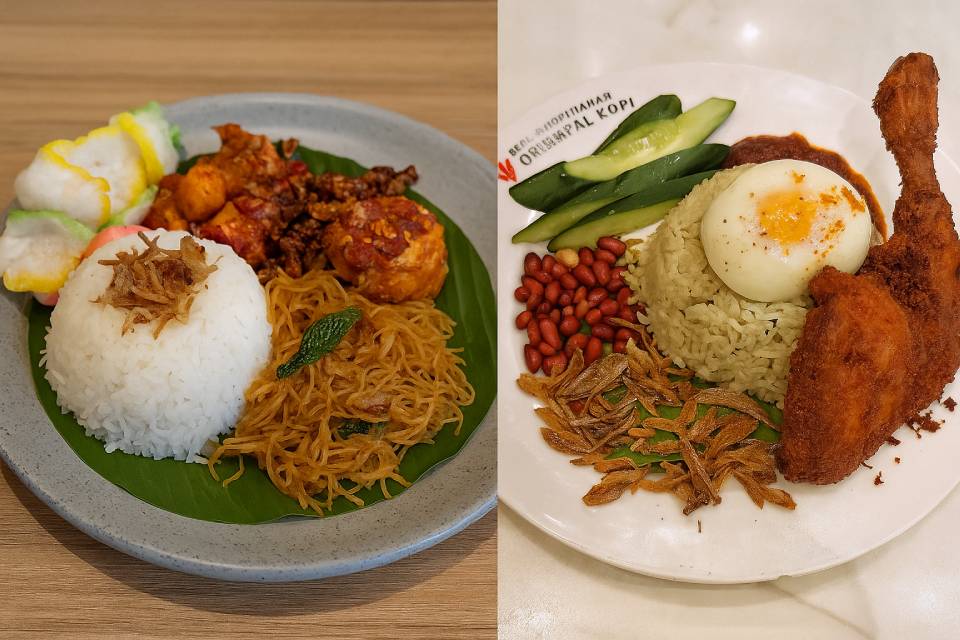
If you’re a die-hard foodie who just can’t live without rice, chances are you’ve come across nasi uduk, one of Indonesia’s most beloved breakfast dishes. But have you ever heard of nasi lemak from Malaysia?
At first glance, these two Southeast Asian coconut rice dishes might look similar. Both are rich, fragrant, and built on a foundation of rice cooked in creamy coconut milk. But make no mistake — nasi uduk and nasi lemak are two very different culinary experiences.
So what sets them apart? Let’s break it down.
1. Cooking Method
Nasi Uduk (Indonesia):
This dish is all about layers of flavor. The rice is cooked in coconut milk with aromatics like lemongrass, bay leaves, and sometimes even garlic. The result? A savory, rich, and slightly herby rice that’s anything but plain. One spoonful and your taste buds will do a happy dance.
Nasi Lemak (Malaysia):
While nasi lemak also uses coconut milk, the star aromatic here is pandan leaves, which give it a soft, sweet fragrance that’s totally different from nasi uduk. The taste is more mellow and creamy — less spice-forward, but incredibly comforting.
2. Cultural Origins
Nasi Uduk:
This dish hails from the Betawi people in Jakarta, blending Malay and Javanese culinary influences, especially during the colonial Dutch East Indies era. It’s a dish that speaks of tradition and celebration in Indonesian culture.
Nasi Lemak:
Widely recognized as Malaysia’s national dish, nasi lemak has been around since at least the 19th century in the Malay Peninsula. It’s deeply rooted in Malaysian identity, often found at street stalls, restaurants, and even upscale hotels.
3. The Side Dishes Game
Nasi Uduk:
If you love a full plate, you’re gonna love nasi uduk. It’s usually served with a variety of side dishes like fried vermicelli noodles, sweet soy tempeh (tempe orek), shredded omelet, sambal, fried shallots, and sometimes beef stew (semur). And let’s not forget the krupuk (Indonesian crackers)!
Nasi Lemak:
This one’s a bit more minimalist, but no less tasty. A typical serving includes fried anchovies (ikan bilis), roasted peanuts, a boiled egg, spicy sambal made from dried chilies, and cucumber slices. Some versions come with fried chicken or even beef rendang for extra indulgence.
4. How and When It’s Served
Nasi Uduk:
It’s a morning staple in Jakarta, often enjoyed as breakfast or during traditional gatherings. You’ll find it beautifully plated or wrapped in banana leaves — perfect for an on-the-go meal.
Nasi Lemak:
Also a go-to breakfast in Malaysia, but thanks to its simplicity and popularity, you can find it any time of day. Whether it’s a quick lunch at a roadside stall or a late-night supper, nasi lemak is always welcome.
So, Which One Wins?
Honestly? It depends on your taste buds.
If you’re into bold, spiced, flavor-packed meals with lots of variety, nasi uduk might be your perfect match. But if you lean towards something creamy, fragrant, and sweet-savory, nasi lemak is calling your name.
Either way, both dishes showcase the culinary creativity of Southeast Asia, transforming simple coconut rice into a legendary, soul-satisfying meal.


