

Lampung, located at the southernmost tip of Sumatra, Indonesia, is not only known for its natural and man-made attractions that draw in travelers, but also for its rich and diverse cultural heritage. One key element of this heritage is its traditional dances, many of which are still preserved and performed during various local ceremonies and celebrations.
Below are five traditional dances from Lampung that continue to play a central role in the region’s cultural identity:
1. Bedana Dance – A Symbol of Islamic Values and Warmth
 The Bedana Dance is deeply rooted in Islamic teachings and reflects the values of hospitality and openness among the Lampung people. Historically, it was performed exclusively by men in groups or pairs, and only for close family members—especially during important milestones such as the completion of Quran recitation.
Over time, the dance evolved and is now commonly showcased at traditional events, making it accessible to a wider audience. The movements are vibrant and expressive, celebrating unity and cultural pride while upholding Islamic tradition.
2. Cangget Dance – Youthful Spirit and Community Bonding
 The Cangget Dance is one of the oldest traditional dances in Lampung, typically performed by young men and women. Before the Japanese occupation in 1942, this dance was a staple during major traditional festivities such as housewarmings, harvest celebrations, and farewells for those embarking on the pilgrimage to Mecca.
Accompanied by traditional musical instruments, the dance encourages social interaction and togetherness. It’s a symbol of harmony, where the community gathers, participates in rituals, and strengthens social bonds.
3. Sembah Dance – A Traditional Welcome Gesture
 Also known as the Welcome Dance, the Sembah Dance is performed to honor and greet guests during formal occasions. The dancers, often adorned in traditional attire, express joy and gratitude through graceful movements and smiling expressions.
Beyond welcoming ceremonies, this dance is also featured in thanksgiving rituals (maras taon) and wedding receptions. Its elegance and poise reflect the Lampung people’s values of respect and hospitality.
4. Sigeh Pengunten Dance – A Modern Twist on Tradition
An evolution of the Sembah Dance, the Sigeh Pengunten Dance blends elements from various Lampung traditional dances to create a harmonious and refined performance. It’s often performed during wedding ceremonies, particularly as part of the welcoming ritual for guests.
The dance tells a story of joy and appreciation, offering respect to those in attendance. It plays an important role in promoting Lampung’s cultural identity and preserving local traditions in a contemporary setting.
5. Tuping Dance – The Masked Celebration of Gratitude
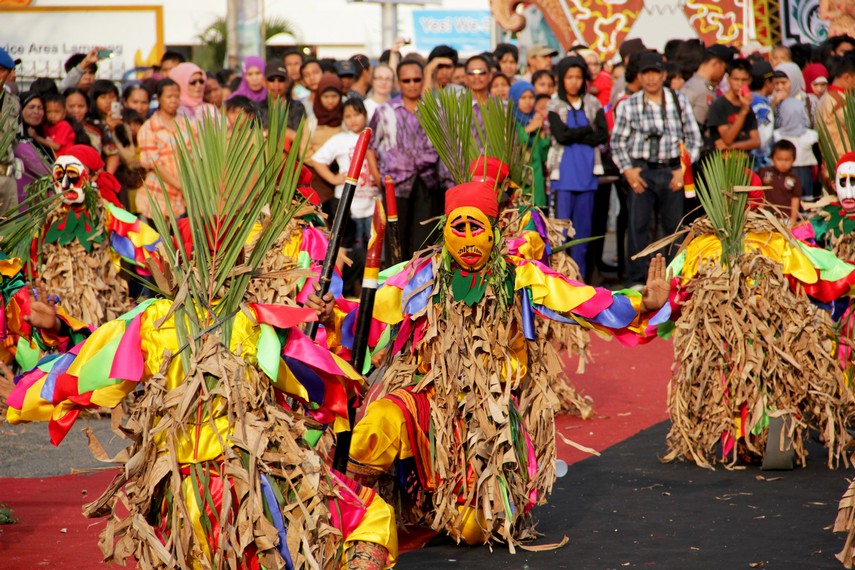 Known locally as Tari Tuping or Sekura Dance, this vibrant and theatrical performance takes place during the Sekura Festival, celebrated at the start of the Islamic month of Syawal (following Eid al-Fitr). Dancers wear colorful masks and costumes, using expressive gestures to convey themes of joy, gratitude, and self-reflection.
The dance serves as a reminder for the community to reflect on their actions and to celebrate life’s blessings with a spirit of renewal and festivity.
These traditional dances are more than just performances—they are living expressions of Lampung’s heritage, beliefs, and communal values. Whether you’re a local revisiting your roots or a traveler seeking authentic cultural experiences, witnessing these dances offers a deeper understanding of the soul of Lampung.
As modernization continues to shape society, it’s vital to support and appreciate these cultural treasures that keep the Lampung identity alive.


