


When creating any kind of design, one key thing you can’t ignore is how you organize the content. This is where layout design comes in.
In simple terms, layout refers to how you arrange elements on a page or screen so that the message is clear, easy to read, and visually appealing. A good layout is like a map—it guides your audience’s eyes and helps them understand your message quickly and logically.
What is Layout in Design?

By definition, layout means “placement” or “arrangement.” In design terms, layout is the process of organizing, positioning, and combining visual elements like text, images, shapes, and space into an aesthetic and persuasive visual composition.
According to design expert Surianto Rustan (author of Layout, Basics & Application, 2009), layout is about placing design elements on a surface to support the overall concept or message.
In graphic design, layout is a basic yet essential branch that deals with the arrangement of text and visuals. How effective your design is often depends on your layout. A good layout ensures that your audience gets the intended message without confusion.
Basic Principles of Layout Design

When designing a layout, it’s important to follow some basic principles to make sure everything feels intentional and well-organized. According to Surianto Rustan, there are four main layout principles:
1. Sequence (Flow/Hierarchy)
Sequence is all about directing the viewer’s eye. It’s how you guide them to read what’s most important first, then second, and so on. Without a clear sequence, your audience might end up confused and miss the main point.
You can create sequence by using size, color contrast, positioning, and layout flow to highlight what should catch attention first.
2. Emphasis (Focal Point)
Every design needs a focal point. This is where you want your audience’s eyes to land first.
You can create emphasis by:
- Using larger font sizes for key text
- Adding bold, contrasting colors
- Placing important elements in strategic positions (remember: people usually read left to right, top to bottom)
- Using a different style (like bold or italic) to make key parts stand out
3. Balance
Balance is about distributing elements evenly across your layout. It makes your design feel stable and easy on the eyes.
There are two types of balance:
- Symmetrical Balance: Even, stable, and formal
- Asymmetrical Balance: More dynamic and visually interesting
4. Unity
Unity means all your elements feel connected and part of the same story. Text, images, lines, shapes—they should all work together harmoniously.
A good layout needs to meet three core criteria:
- It Works: It achieves the design’s goal
- It Organizes: It’s well-structured
- It Attracts: It grabs and holds attention (Rustan, 2009:30)
Essential Elements of Layout Design
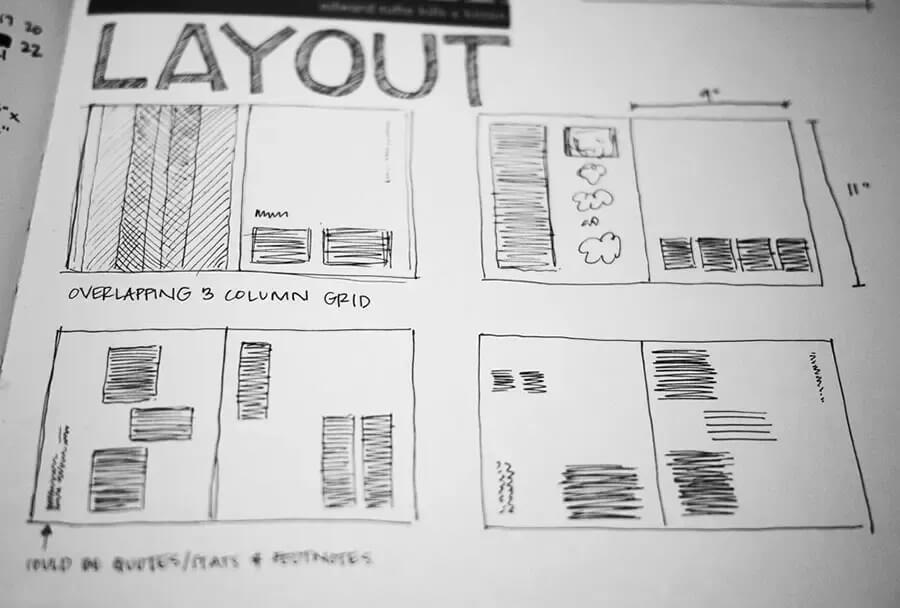
According to flux-academy.com, here are the key elements you’ll often find in a layout design:
- Text: Includes titles, headings, body content, and captions. Proper typography and text hierarchy are essential.
- Images: Photos, illustrations, and graphics help bring context and emotion to the design.
- Lines: Used for dividing sections, guiding the reader’s eye, or emphasizing specific areas.
- Shapes: Circles, rectangles, and other forms add structure and creativity.
- White Space (Negative Space): Empty space that helps prevent the design from looking cluttered and gives breathing room between elements.
Goals and Benefits of Good Layout Design

The main purpose of layout design is to create a communicative, visually balanced, and user-friendly design.
When your layout is done right, it helps:
- Make text and images more engaging and easy to understand
- Guide the audience’s eyes through the content
- Achieve harmony and aesthetic balance
- Enhance readability and overall user experience
According to Freddy Adiono Basuki (2000), layout design aims to deliver harmony, aesthetics, cost-effectiveness, and communication clarity.
Conclusion: Why Layout Design Matters
In short, layout design is all about how you arrange visual elements like text, images, and shapes in a way that’s both functional and beautiful.
A great layout makes your design look professional, feel harmonious, and communicate clearly.
Quick FAQ About Layout Design:
What is a layout in design?
It’s the arrangement of visual elements within a design space, focusing on organization and presentation.
What’s the main purpose of layout design?
To organize content visually so that the final design feels harmonious, clear, and communicates effectively.
How do I create a good layout?
Start with a sketch of your visual composition → Arrange text and images → Finalize everything into a balanced, readable, and visually appealing design.

